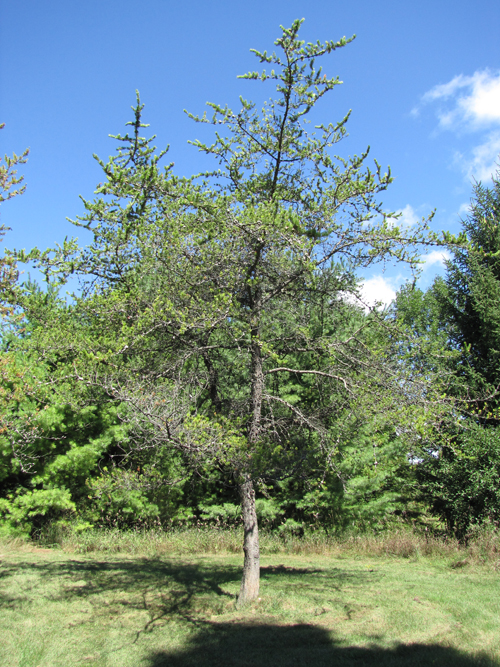
Jack pine may be the most well known conifer on the prairies, if not in all of Canada. To many people the name Jack Pine is synonymous with all needle bearing conifers found across Canada. The reality however is that Jack Pine does refer to a specific species within the genus: Pinus. The question then arose; why is this particular tree so commonly known in Canada?
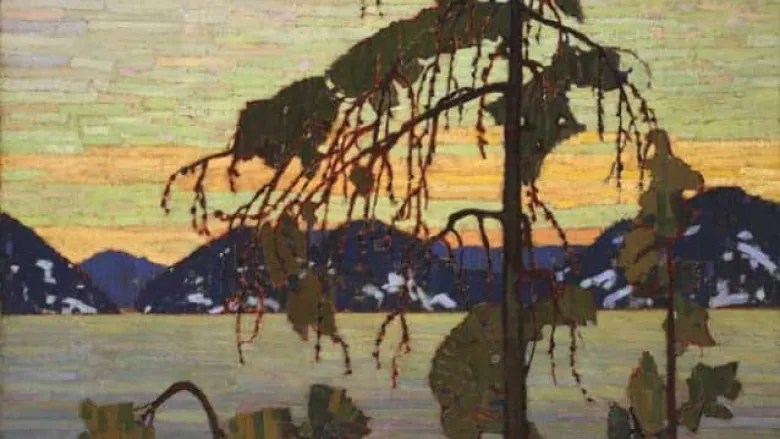
An internet search revealed that one of our nations most iconic paintings is named “Jack Pine”. It was painted by Tom Thomas between 1916-1917, and is widely regarded as our nations most famous painting. I did not quite come to an understanding of how Pinus banksiana came to be known as Jack Pine, but I did learn a little more about Canadian heritage.
Order: Pinales – Family: Pinaceae – Genus: Pinus – Species: P. banksiana
Growth Patterns: Small to medium size, rarely greater than 30 meters in height. Up to 30 cm diameter. Lifespan of 150 years. Growth rate is variably listed, as rapid.
Leaves: Evergreen needles in bundles of two. They are straight or slightly twisted, and pointy. Length is 2-4 cm (~1 – 1.5 inces).
Cones: 3-7cm long. Variable shape, oblong, straight or curved inward. Often in clusters of 2 or 3 at a node. They stay closed and persistent on the tree for 10-20 years. They open when exposed to heat, usually from fire, but sometimes from sun on very hot days.
Bark: Reddish brown to grey when young, turning to dark brown with age. Thin when young, flaky. With age form into plates that are thick and irregular.
Distribution: Most widely distributed pine in Canada. Primarily Central and Atlantic.
Habitat: Course sand, shallow soils, and rocky outcroppings. Permafrost.
Notes:
 The Wild
Leave a comment