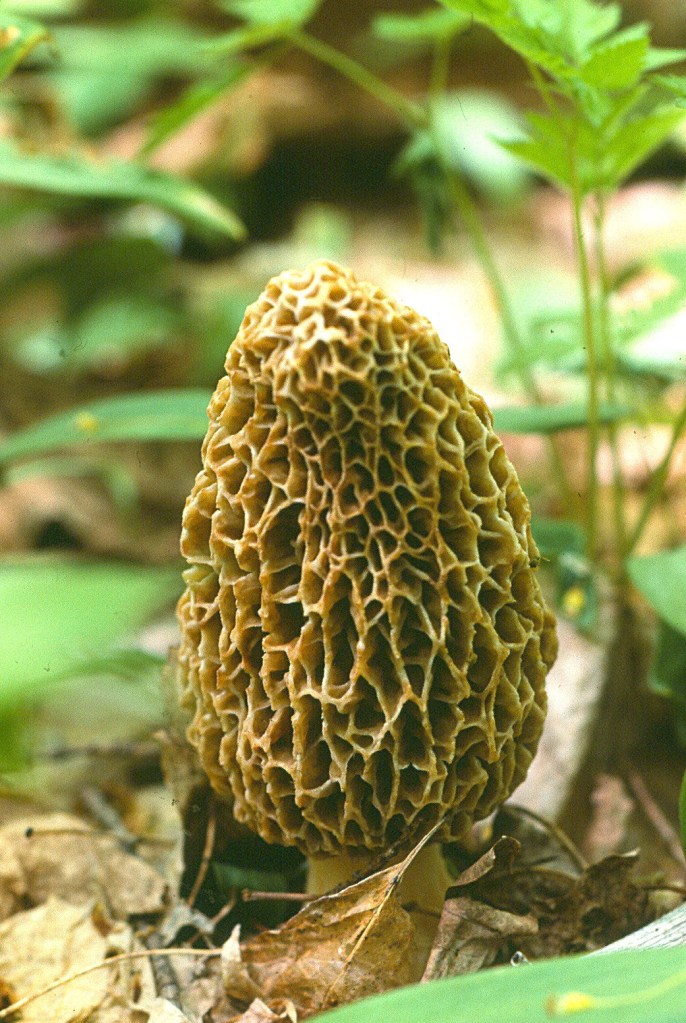
The first time I went on a wild foraging expedition was many years ago. I had just completed my first year of college, and a friend convinced me and a few others that we should go into the far north to the site of a forest fire to pick morel mushrooms for the summer. He had learned about the industry from a fellow grad student, and knew just enough to “organize” his own expedition. Under his guidance and encouragement we planned and outfitted ourselves to pick, dry and process morels, and then headed north. We were in for a real bush education.
The Morel is a highly prized wild mushroom in the culinary world that cannot be grown in controlled environments, and for which there is significant global demand. The morel industry is worth hundreds of millions annually, a number that continues to attract adventurous souls, in what I can only describe as a phenomenon similar to the gold fever of yesteryear.
There are many stories I could tell about this and other expeditions, but that is not what I want to do here today. Instead I want to ask a question that has nagged at me for years; is there benefit to eating wild foods as opposed to those produced through our modern agricultural methods?
I was at the University library looking for information on arboriculture when I came across a book of interest. Nestled in among some books on tree fungus a title caught my eye: “Edible Mushrooms – Chemical Composition and Nutritional Values.” I pulled the book and after consulting the table of contents made for the checkout, my class project forgotten.
The book turned out to be quite technical, but Kalac did a very good job of presenting the information in a way that even a novice like myself could understand. The author speaks to the difference between farmed and wild grown mushrooms, and even demonstrates the difference in mineral composition between one species that is both grown wild and in controlled environments.
When speaking about major mineral contents kalac states that higher mineral quantities in wild mushrooms “probably results from the greater variability of substrates in nature.” Substrates in this context means the soil in which the wild mushrooms grow.
This information is not surprising or novel, but it is the first time I have found an academic source that confirms what others (myself included) have been suggesting. There is a demonstrable difference in the nutritional composition of foods grown in natural soils vs those grown in controlled environments.
A couple of my favourite wild mushrooms

Chicken of the Woods
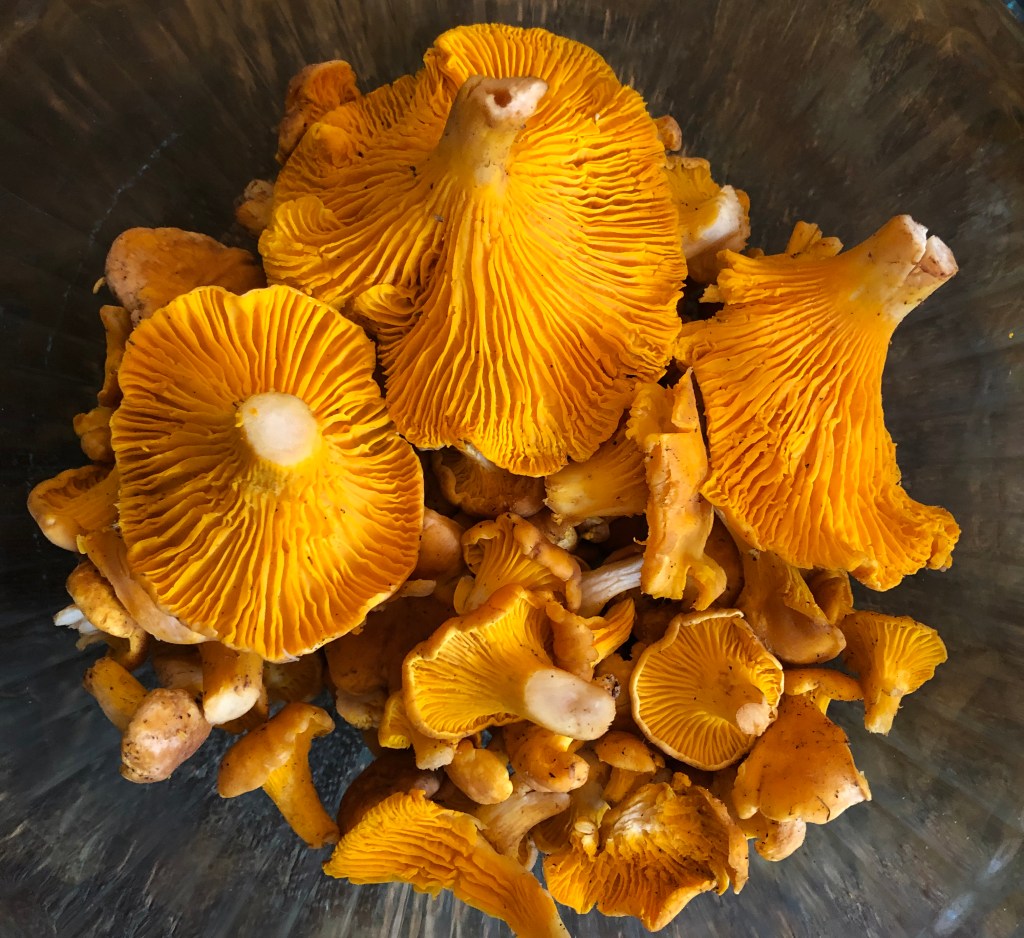
Chanterelle Mushrooms
As a current student of horticulture my primary focus is on greenhouse production. The program has taught us about the 17 essentials elements required to produce vibrant and vigorous plants in a controlled setting. There is no denying that this approach to growing works, but are those 17 elements enough to produce food that is sufficiently nutritious to humans?
To answer that we need to understand exactly what the human body needs, and the in lies the true problem. I am not sure that science has provided us with a comprehensive guide to human nutrition – at least not one that I am comfortable with. Nutrition as a science seems a little uncertain of itself, but perhaps that is only my bias speaking.
As someone with a vested interest in producing healthy foods, I hope that our understanding of nutrition continues to advance at pace with the technology being developed to feed our populations in a word of rapid change. I cannot say with certainty that wild grown foods are better or worse than those produced in controlled environments, only that they are different. It rests upon the science of nutrition to do the rest, and it is in this field that I feel we need to invest more energy.
References:
Kalac, Pavel. Edible Mushrooms – Chemical Composition and Nutritional Values. 1 ed., Academic Press, 2016.
Olga Aleksandra, CC BY 4.0 https://creativecommons.org/licenses/by/4.0, via Wikimedia Commons
Doug Bowman from DeKalb IL, USA, CC BY 2.0 https://creativecommons.org/licenses/by/2.0, via Wikimedia Commons
Netherzone, CC BY-SA 4.0 https://creativecommons.org/licenses/by-sa/4.0, via Wikimedia Commons
Find used and new copies of the book “Edible Mushrooms – Chemical Composition and Nutritional Values” at abe books.
 The Wild
Leave a comment