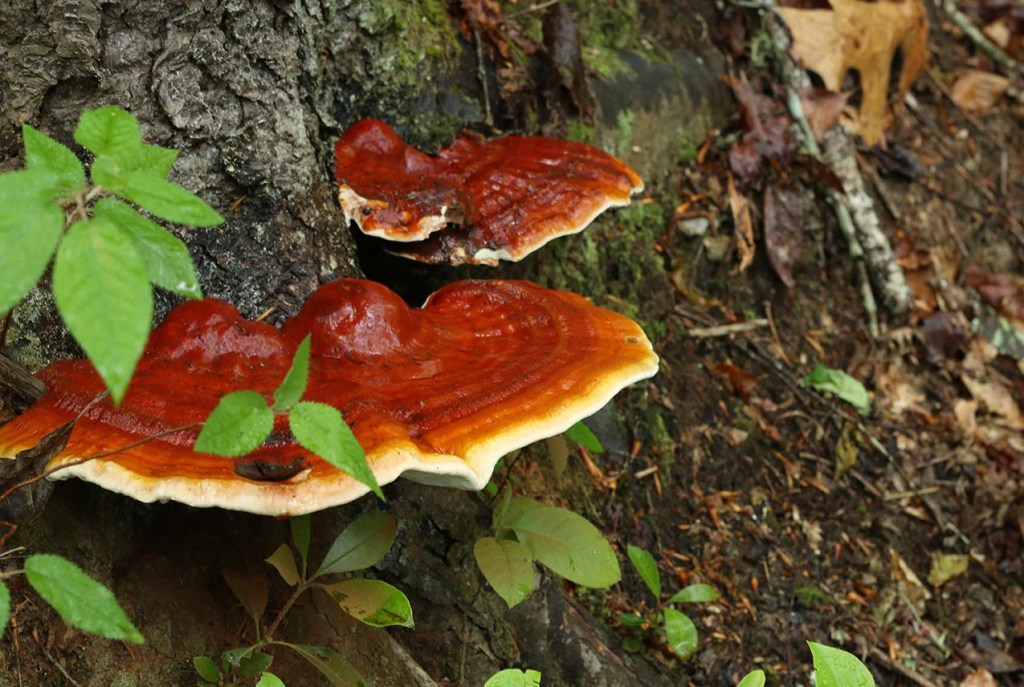
It is mushroom season on the west coast of Canada, and I have been swept up in the enthusiasm.
In addition to having some wild foraged chanterelles this past week (delicious and nutritious), I also met a mushroom farmer who is producing a variety of different mycological products. I chatted with her for a while at the farmers market, and in a moment of impulsivity picked up a bag of dried reishi.
After bringing the bag of fungus home I dove into the research! I went to a technical source in an attempt to gather some facts about reishi and its medicinal properties. The primary document I looked at was located in the United States Government National Library of Medicine (online), and is referenced below. I also spent some time learning how to make reishi tea!
<>
Reishi is a fungus that has been on my radar for many years, but which I have never used. I generally try to avoid supplements and medicinal products in favor of whole foods and other health practices. This is largely due to my (and other peoples) success in managing health through diet, exercise, and “good living.”
The paper contained a brief and interesting history of reishi, and its use in Chinese Traditional Medicine. Much of the technical information was beyond my undergraduate education, but it is clear that reishi could have a wide range of applications. Potential health related benefits include: anticancer effects, blood glucose regulation, antioxidant, antibacterial, and antiviral effects; and protection against liver and gastric injury.
The paper concludes that reishi holds potential, but more testing is necessary, especially in human subjects. There are also questions about quality control and standardization of treatments across different studies both historically and going foreword.
<>
I am always skeptical of products that promise health benefits, especially if there is a significant amount of money to be made. I would hate to give anyone poor health advice, but at least in my case I cannot see the value after more than a week of use.
To wrap up, I am not an expert and my feelings and beliefs on this topic are not to be confused with the advice of a health professional. I have some personal results that speak to its efficacy, but again, I did not construct a controlled trial and anything I present would be anecdotal.
Just remember what the romans used to say about olive oil sellers: caveat emptor – Let the buyer beware.
References:
https://www.sciencedirect.com/topics/immunology-and-microbiology/lingzhi-mushroom
 The Wild
Leave a comment