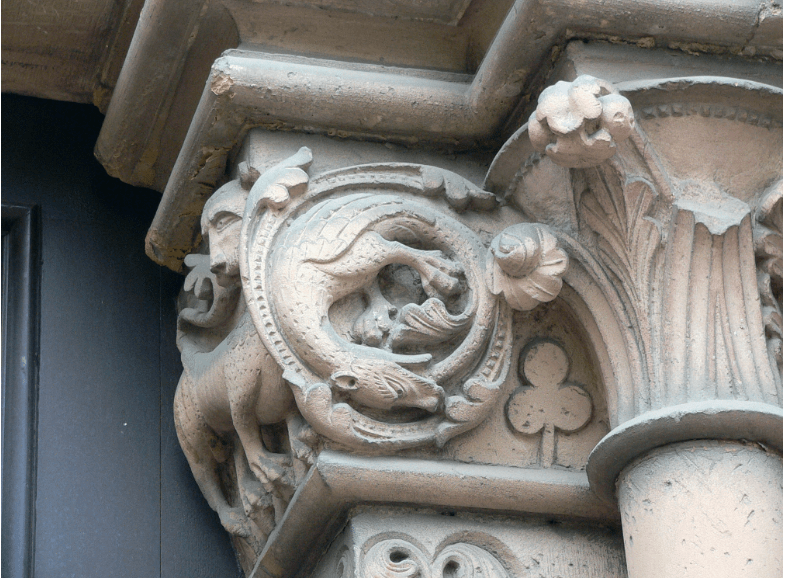
A meditation
I have long been interested in the story of Leviathan. It is a tale that has been around for a very long time, and as such has seen many interpretations.
In all of them the leviathan is a mighty beast of the sea. Often described as having many heads, an impenetrable scale hide, and breath of fire. The image of Leviathan has found itself into many facets of our culture.
The particular interpretation I like is the one that sees leviathan as a creature of God. Not good or evil, but rather a beast of creation, with a special part to play. In my favorite stories the Leviathan is used as a means to punish hubris, especially among those who hold a great deal of power.
The story hearkens back to a time before our modern separation of the Church and State, to a time when religious leaders often held supreme power as divinely chosen leaders. Whatever your opinion of theocracy, a simple truth remains. Even the most laudable institutions have always been made of human beings. And if history has taught us anything, it is that human beings are fallible.
Like individuals, over time our institutions become ever more prone to corruption. Where once an order might have been created on lofty ideals and selfless service, over time there is a tendency for less savory objectives to emerge. The pursuit of power, wealth, and fame are some of the more common.
As such institutions evolve, and power becomes increasingly concentrated and sought after, there is a tendency for the holders thereof to fall into hubris. It is a natural consequence of allowing people to grow overly powerful. As they say, goodness and greatness can rarely exist in the same person.
The modern definition of hubris is normally associated with excessive pride, but in a more archaic context its specific meaning was to “show excessive pride or defiance towards God.”
This is where Leviathan comes in. As a creature of God, it was the Leviathans purpose and calling to hold to account those who succumbed to hubris.
From Job 41
Today, in a world overflowing in hubris, I cannot help but look upon the Leviathan of antiquity with a welcoming eye. Far from being the devil, or some demonic creature – it is but a manifestation of justice – a part of the natural order. My Leviathan is a force of nature, justice and balance.
Image source:
© Koninklijke Brill NV, Leiden, 2020 IMAGES
Also available online—brill.com/ima DOI:10.1163/18718000-12340134
BORIS KHAIMOVICH
LEVIATHAN: THE METAMORPHOSIS OF A MEDIEVAL IMAGE
 The Wild
Leave a comment